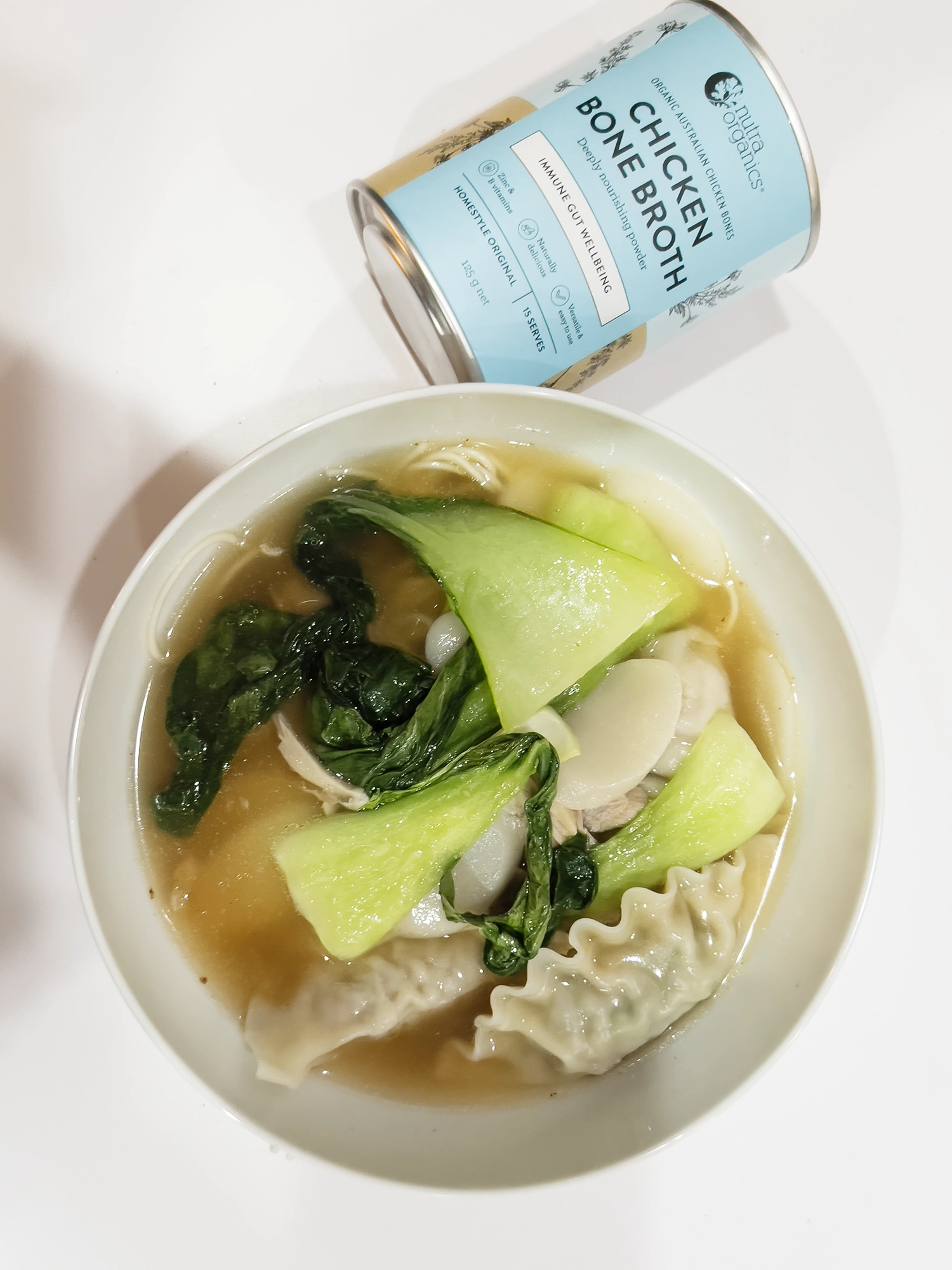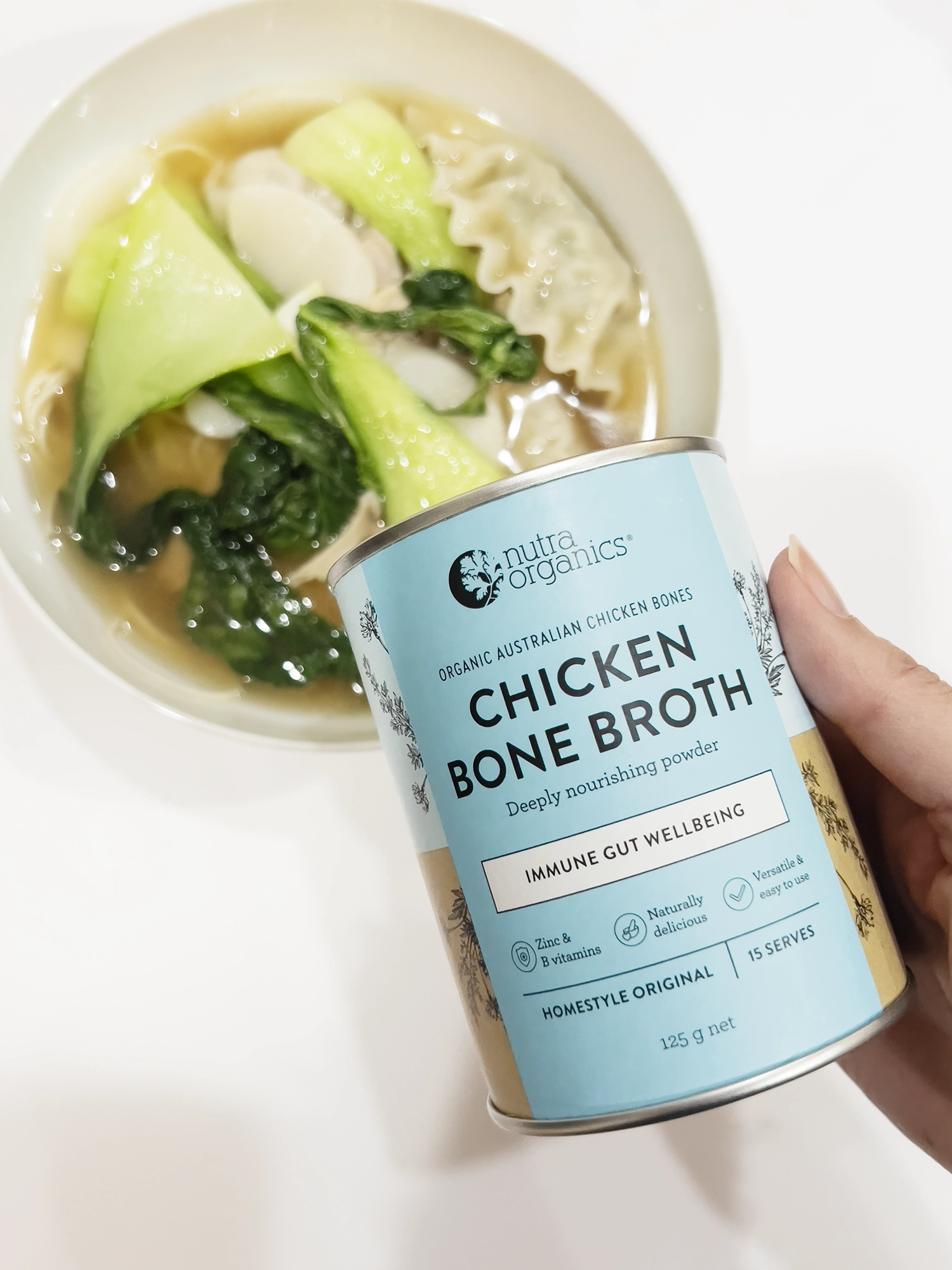
Bone broth has slowly worked its way into my kitchen, not because I set out to drink more broth or follow any kind of trend, but because it’s one of those small, practical upgrades that makes everyday food taste noticeably better without changing how I cook.
At its core, bone broth is very simple. Bones are simmered for hours, sometimes days, until the flavor deepens and everything that gives the broth body and richness is drawn out into the liquid. That long cooking time is what makes the difference. You end up with something that feels fuller, rounder, and slightly silky in a way regular stock from the grocery store rarely does, and if it firms up a bit when you put it in the fridge, you know you’re dealing with a proper one.
There’s a lot of talk about collagen, amino acids, and gut health, and yes, bone broth does contain all of that. It’s often mentioned in connection with joint health, skin, and digestion. For me, it’s not really about the health claims. It’s about that first sip when you realize how good something this simple can actually taste. When I’m traveling og when days are particularly busy, a cup of warm broth is what I’m reaching for to reset and destress.
Not all bone broth is worth your time, and this is one of those things where quality really matters. A good bone broth has body without being thick, and the flavor should feel deep and layered rather than salty or flat. It should taste like it has been simmering for hours, because it has. When you chill it, it should have that slight gel-like consistency from the natural gelatin, and the ingredient list should be short and straightforward. Bones, water, maybe a few vegetables. That’s it.
How I Use Bone Broth in My Cooking
What I like most about bone broth is how versatile and easy it is to use. When I cook rice, I often replace the water with bone broth or do half and half. It instantly makes the rice taste so much better and immediately levels up a simple weekday meal.
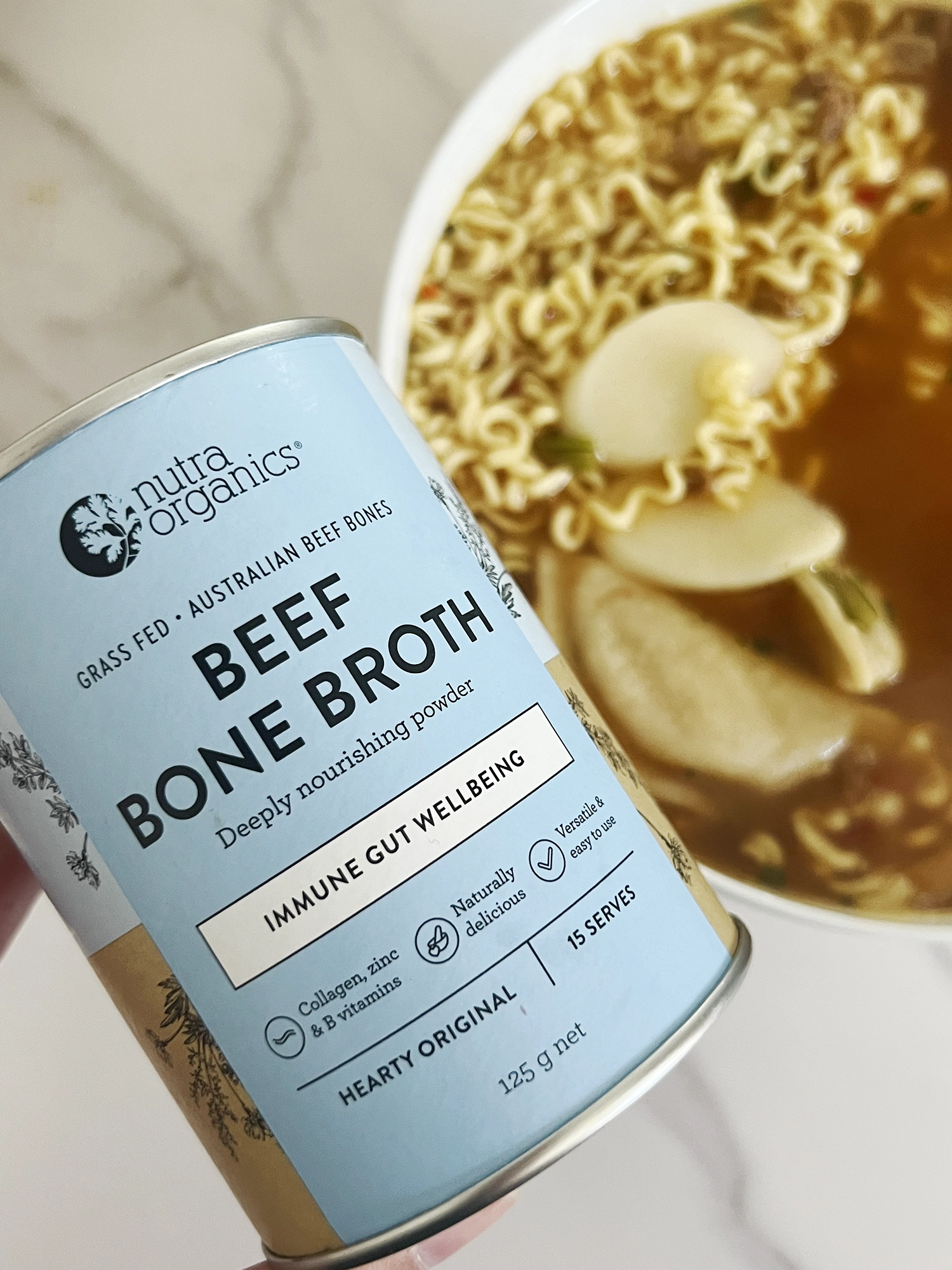
When I make instant ramen, I add a teaspoon of bone broth powder or a splash of liquid broth. It turns something basic into something quite amazing.
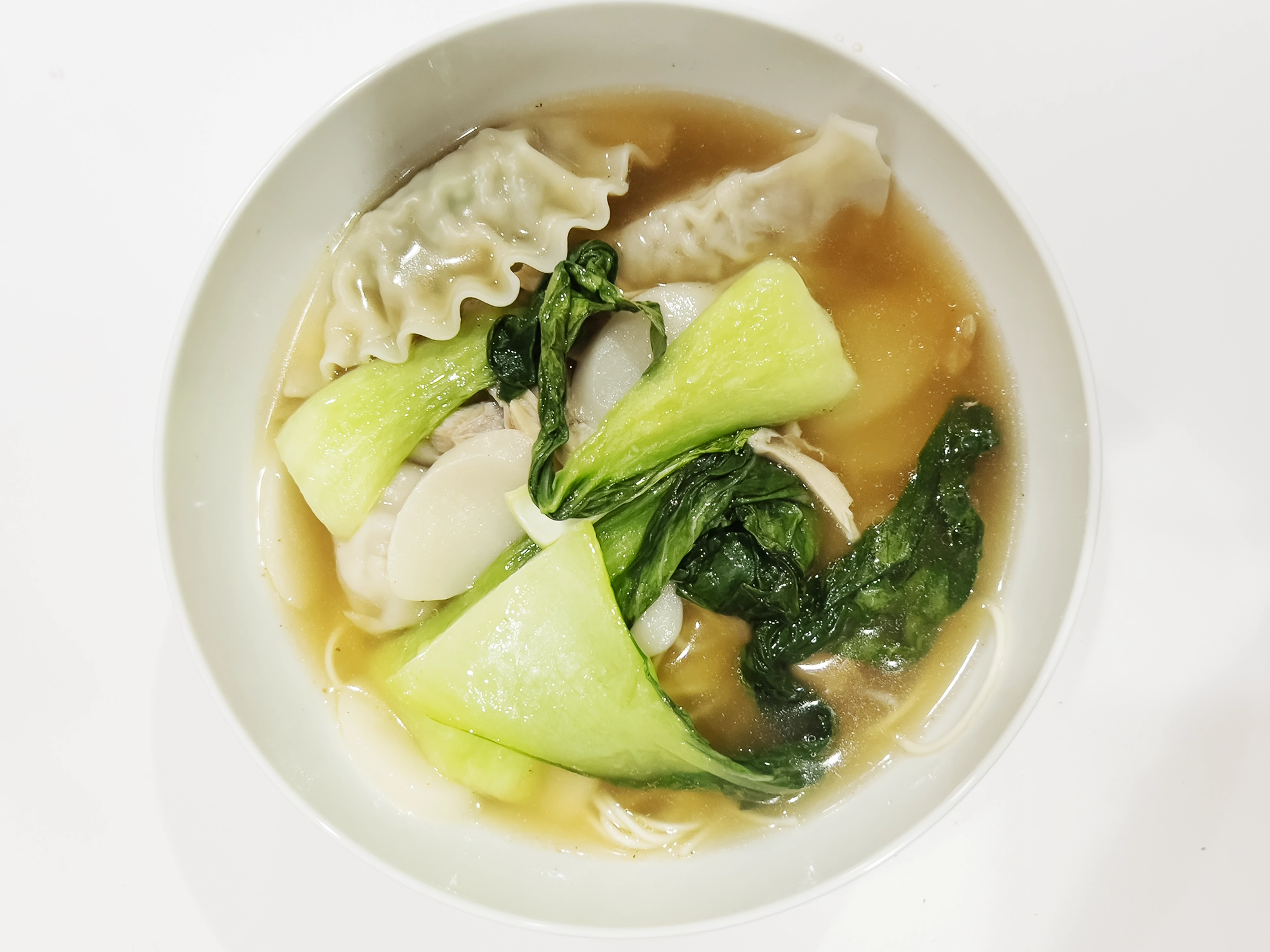
It also works as a soup base, which is obvious, but once you start with a good broth, everything else falls into place much more easily.
A splash in a pasta sauce adds depth without making it heavy.
Using it to deglaze a pan gives you a quick sauce that tastes like you put in more effort than you actually did.
Grains like quinoa or farro become more interesting when they’re cooked in broth instead of water.
Even vegetables, especially mushrooms or greens, benefit from a little bone broth in the pan.
If I have leftovers, I pour them into ice cube trays and keep them in the freezer, so I always have small portions ready to go.
And if the quality is there, I’ll sometimes just heat it up and drink it as it is, usually in the afternoon or in the evening when I want something warm but not too heavy.