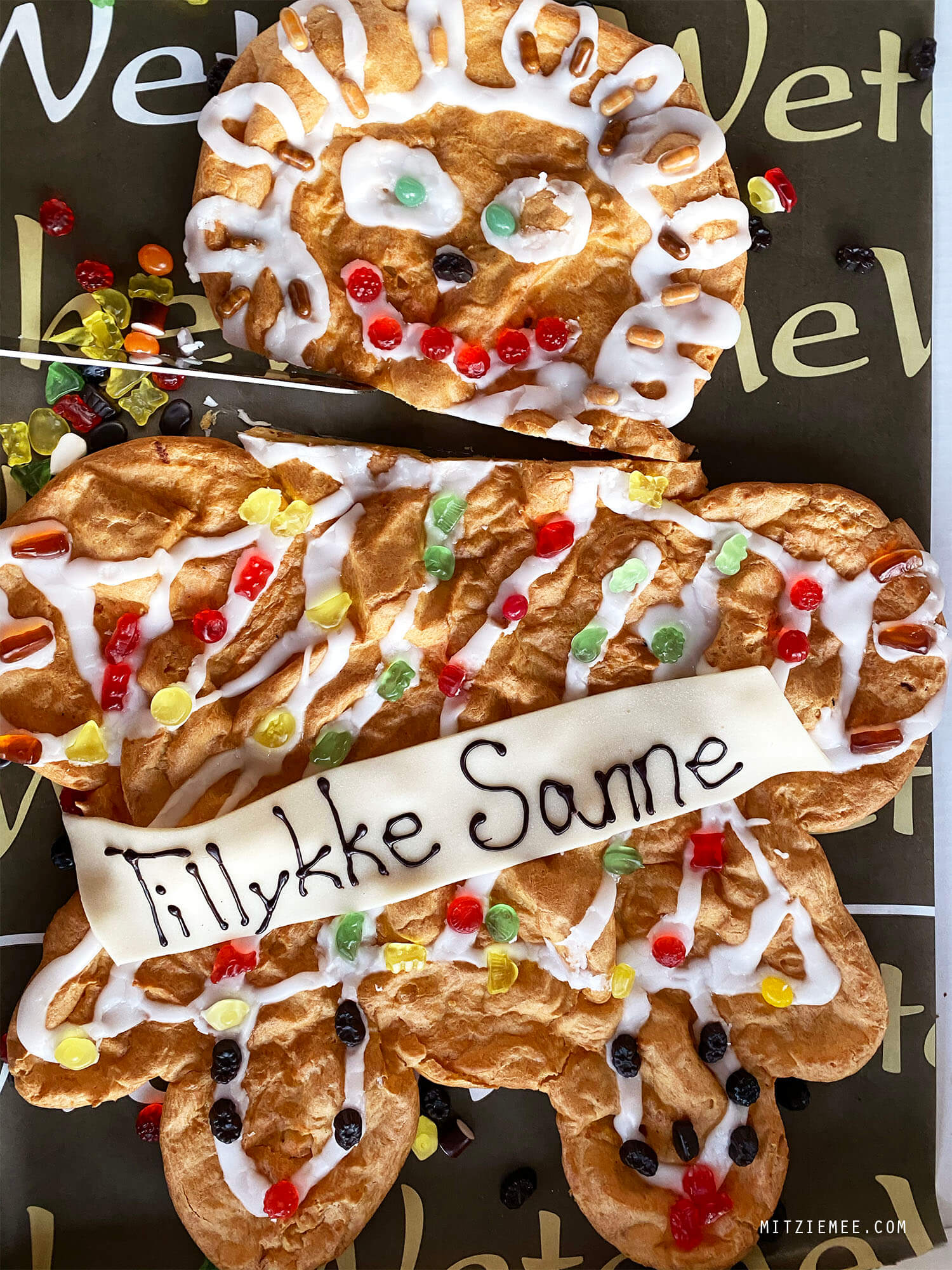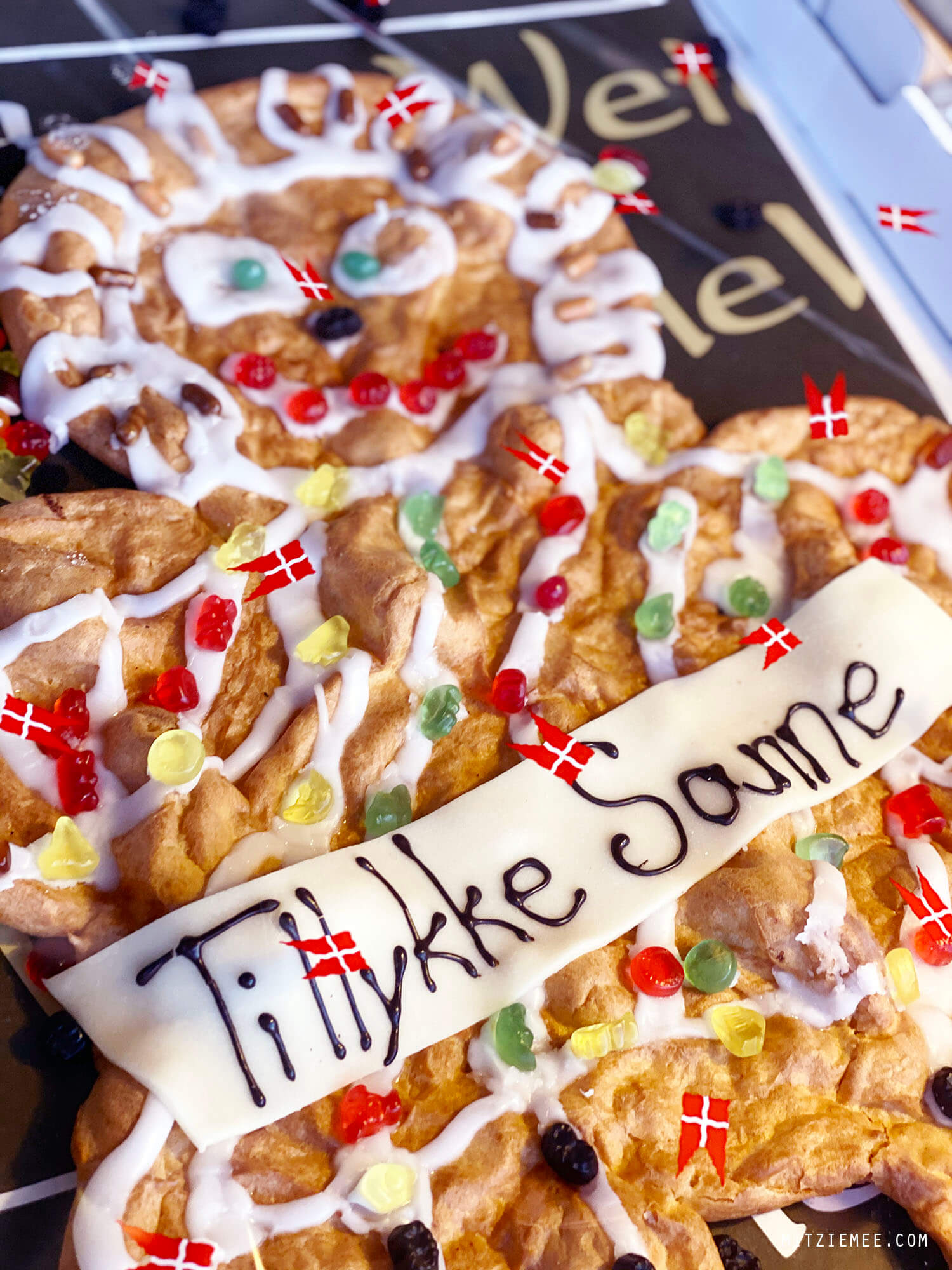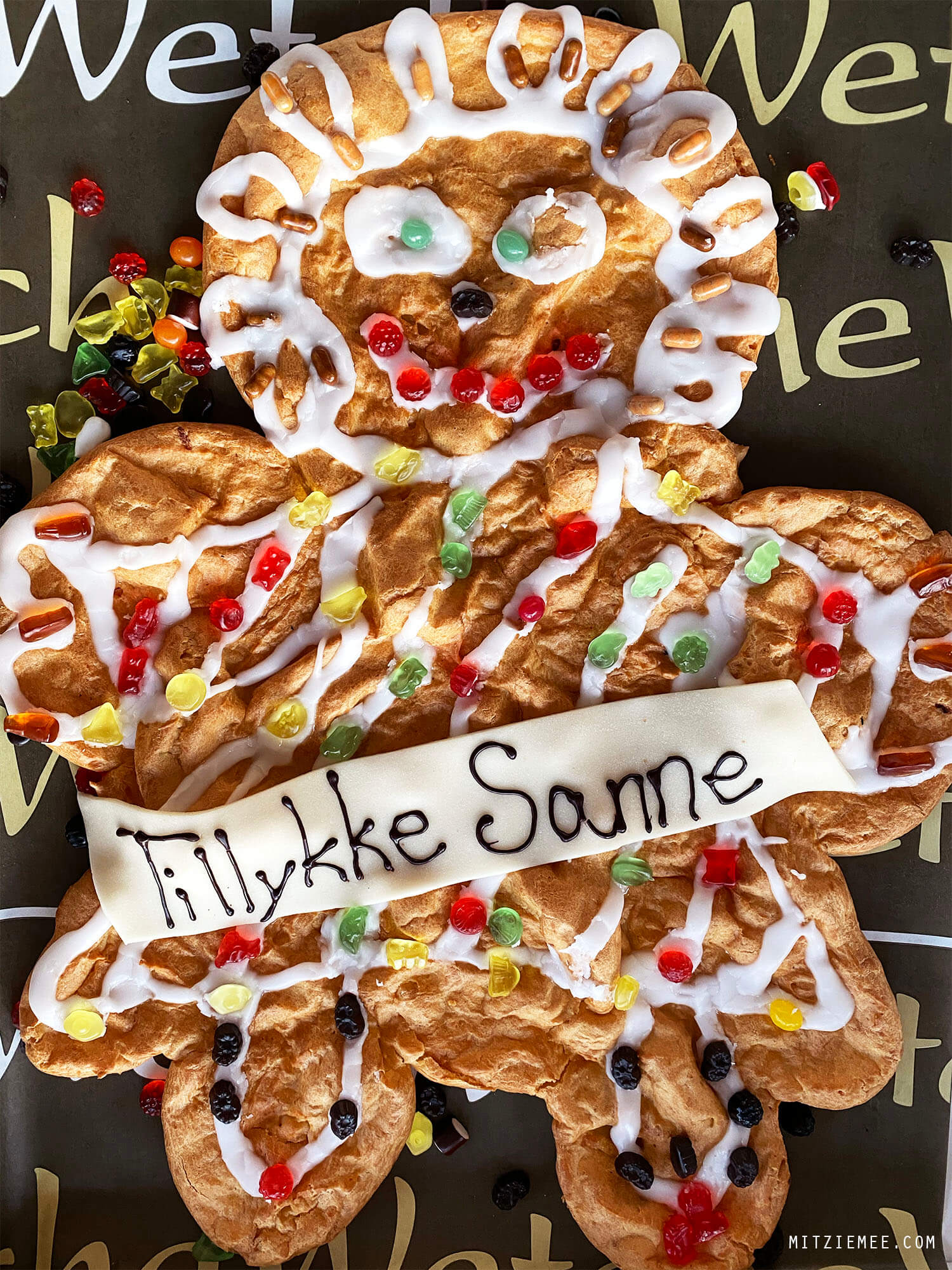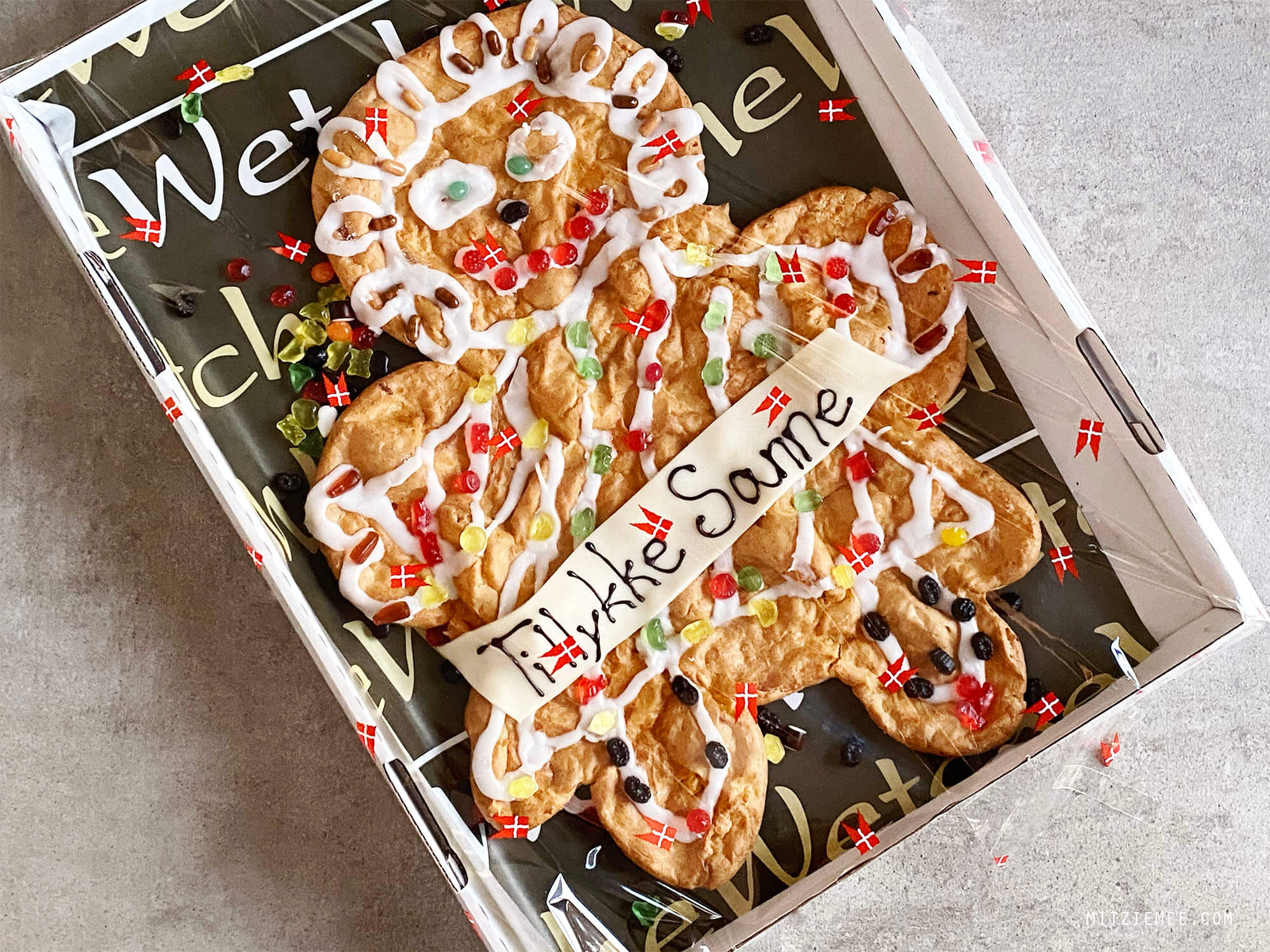
Yesterday was my birthday, and my family surprised me with a kagekone from the local bakery. It’s one of those very Danish traditions that feels completely normal when you grow up with it, but slightly absurd the moment you try to explain it to someone else.
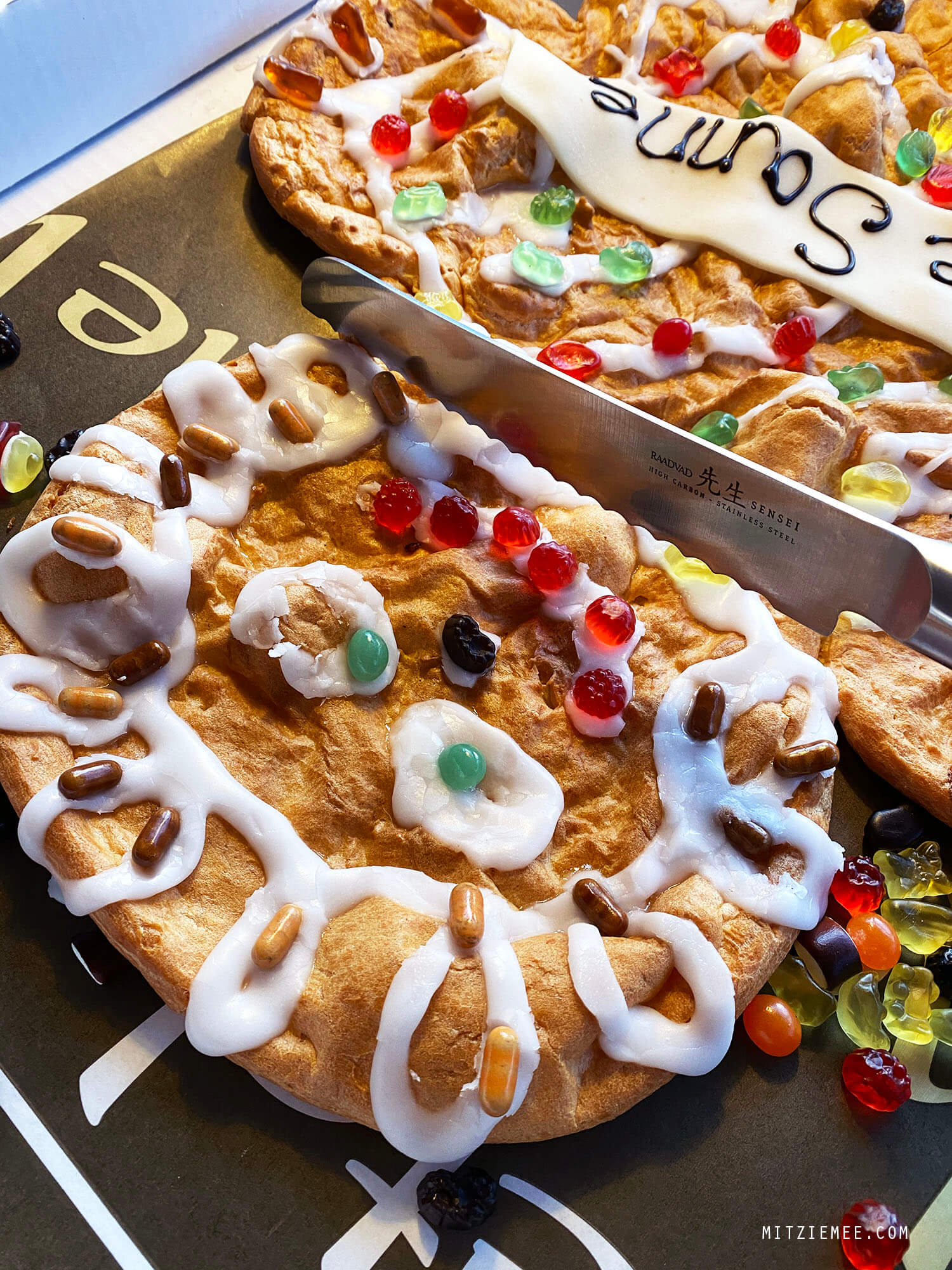
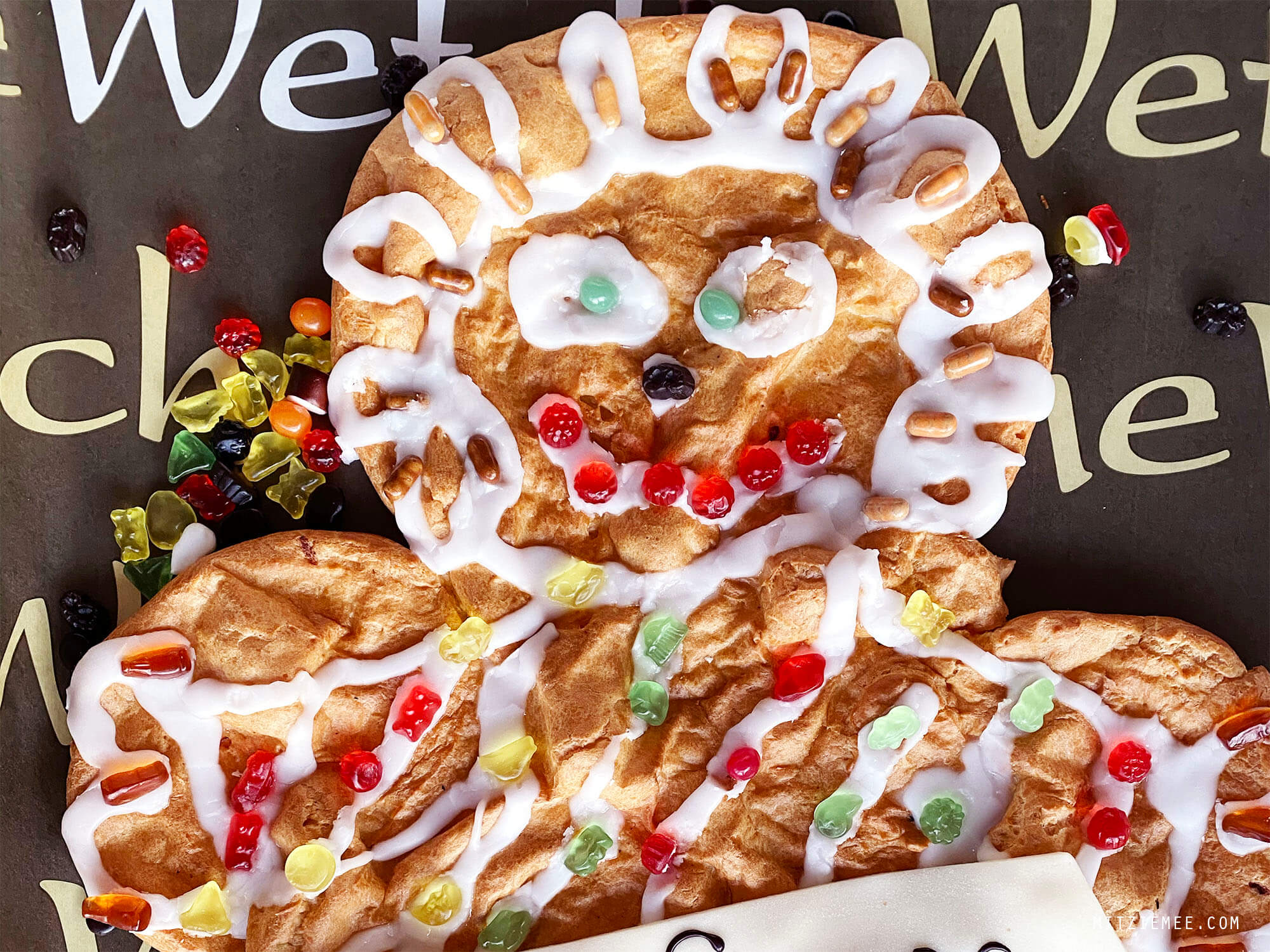
In Denmark, kagekone and kagemand (cake woman and cake man) are classic birthday cakes, especially at children’s birthday parties. The cake is shaped like a person and decorated with sugar icing and lots of candy. The icing forms the face with eyes, nose, mouth, and hair, while the body is usually covered in colorful sweets. Licorice, gummies, chocolate, and small wrapped candies are all fair game. The head almost always has the most candy, which also makes it the most popular part. Very often, the cake is also decorated with small Danish flags, either stuck directly into the icing or placed around the cake.
The Danish flag shows up at birthdays for a reason. We love our flag, and unlike in many other countries, it’s not reserved for official occasions. The flag comes out for celebrations big and small, including birthdays, family gatherings, graduations, and pretty much any happy excuse you can think of. A birthday table without flags would feel strangely incomplete.
There’s also a little ritual involved. Traditionally, the cake is decapitated first. When the knife cuts through the neck, everyone at the party is supposed to scream as loudly as possible. It’s completely theatrical and meant to be funny. As kids, we loved it. I remember the screaming as one of the highlights of my own birthday parties. Looking back now, it sounds pretty bizarre, but in the moment it’s just part of the fun. Paper flags on the table, excited kids, sugar highs, and exaggerated fake horror.
There aren’t any strict rules. Some families always start with the head, others cut the cake like any normal cake, and some skip the screaming altogether. But the dramatic first cut is something most Danes instantly recognize.
As for the cake itself, there’s no single correct version. Kagekone and kagemand are often made from vandbakkelse, a type of choux pastry similar to what’s used for cream puffs. That was also the case with mine. Inside, it’s usually filled with whipped cream, sometimes mixed with custard or jam. Other versions are made with sponge cake or sweet yeast dough. The most important thing isn’t the base, but the decorations. As long as there’s icing and candy on top, it counts.